
Business Challenges
What's the business context?
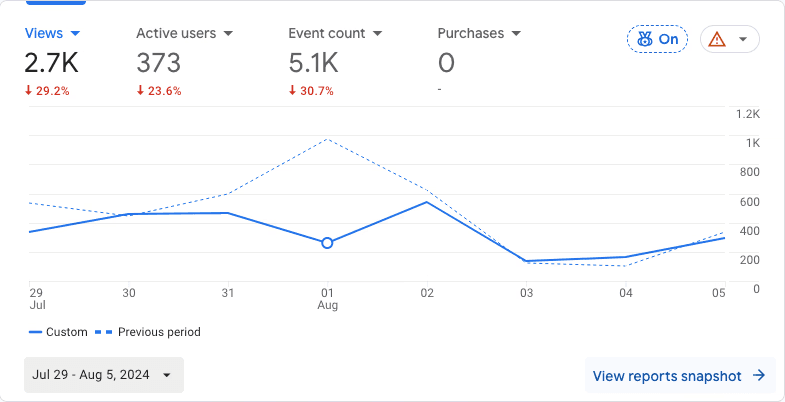
The product was facing low monthly active users and struggling with sign-up and free-to-paid conversion.
Assumptions
What might went wrong?

Users are not getting value from the product.

Usability issues uncovered during my initial product walkthrough suggest users may find the product difficult to use.
Research Goals
From assumptions, I collaborated with the product team to define two research goals.
01
Understand whether users are able to experience the core value of the product in their investment scenarios.
02
Uncover usability issues that impact users’ ability to complete tasks and satisfaction to the product.
Research Methods
01
Customer Survey
Collected user profiles, gathered feature feedback, and recruited participants by sending customer surveys via email.
02
Usability Testing
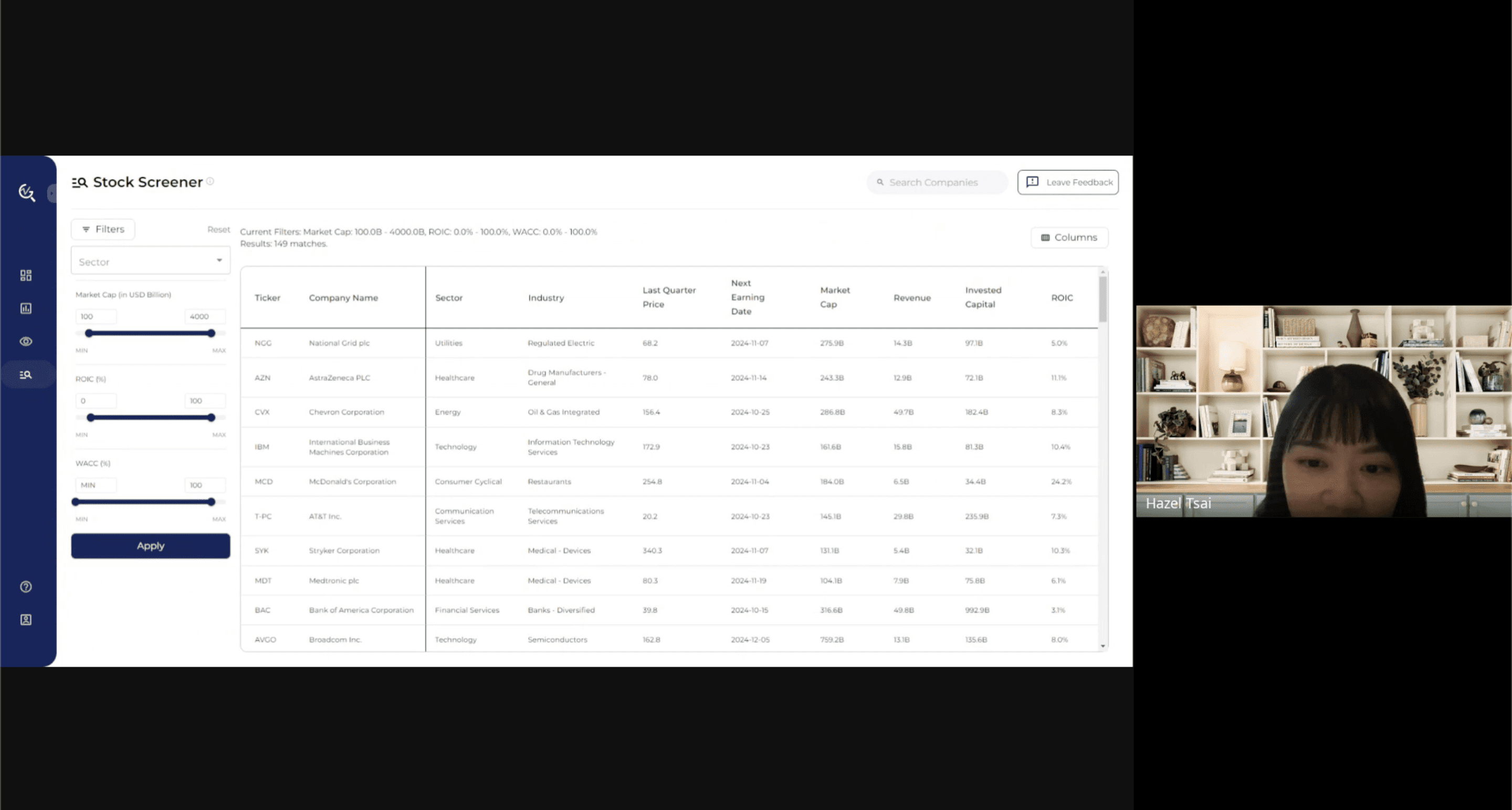
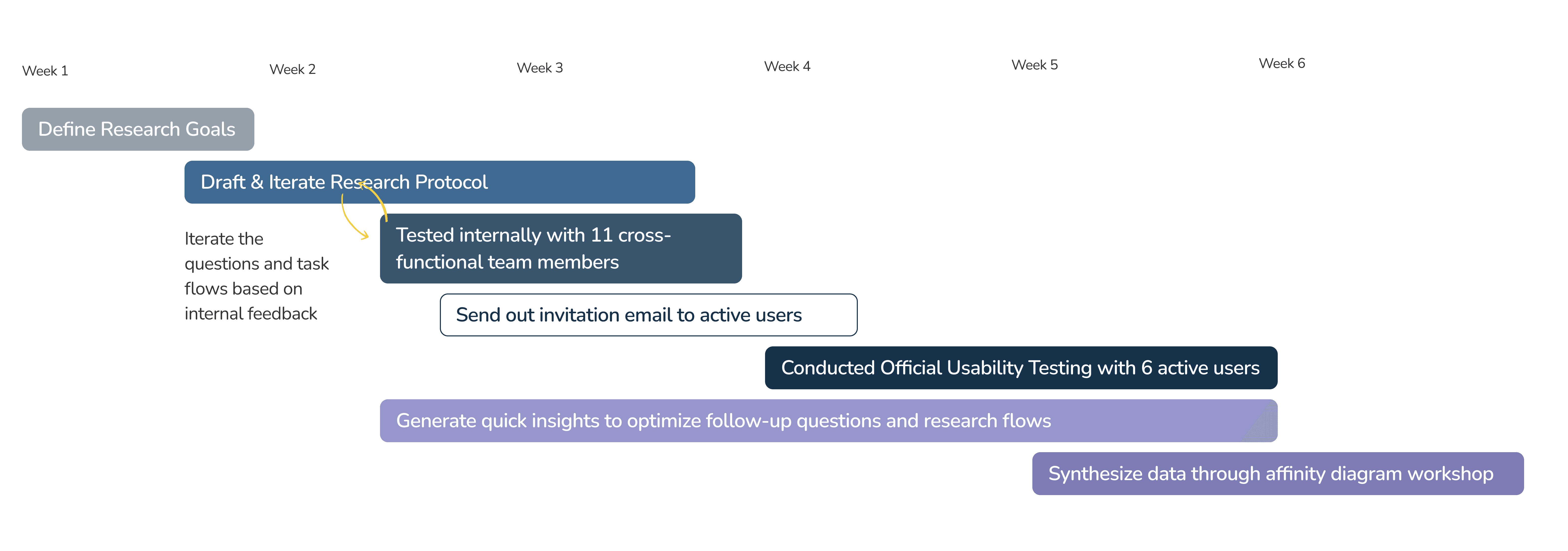
To gain insights of how users interact with the tool in real investing contexts, I designed scenario-based usability testing flows.
I invited internal finance analyst to the sessions, helping bridge the gap between financial logic and user experience
I highlight key finding and summarize sessions with empathy map after sessions to share quick insights across team.
03
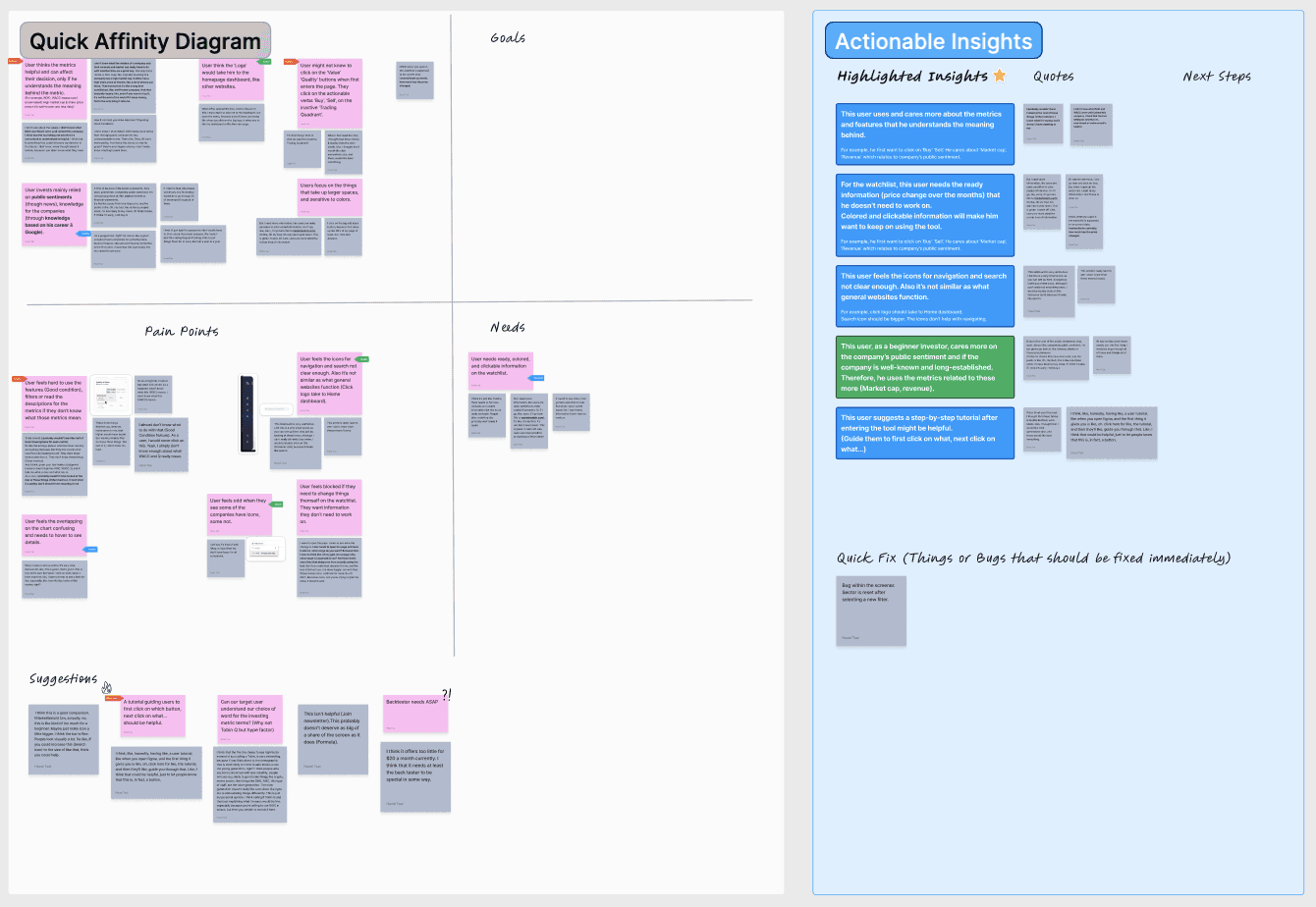
Affinity Diagram Workshop
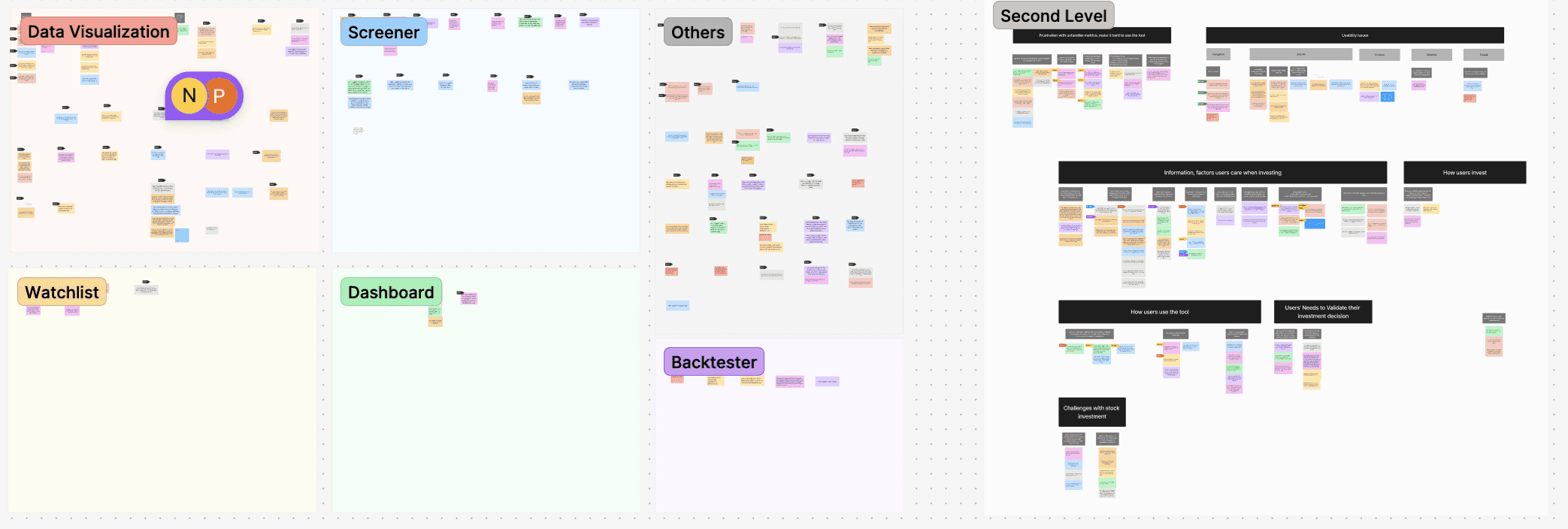
I facilitated the affinity diagram workshop. We synthesized research findings in two layers, initially grouping by feature, then reorganizing into higher-level conceptual themes that revealed patterns across the product.






04
Customer Journey Mapping
Conducted customer journey analysis using cross-channel data (AWS, Stripe, Substack), combined with usability insights to visualize current pain points and prioritize the projects.
I designed 4 tasks to cover product features. For each task, I defined testing goal, task descriptions, and follow-up questions.
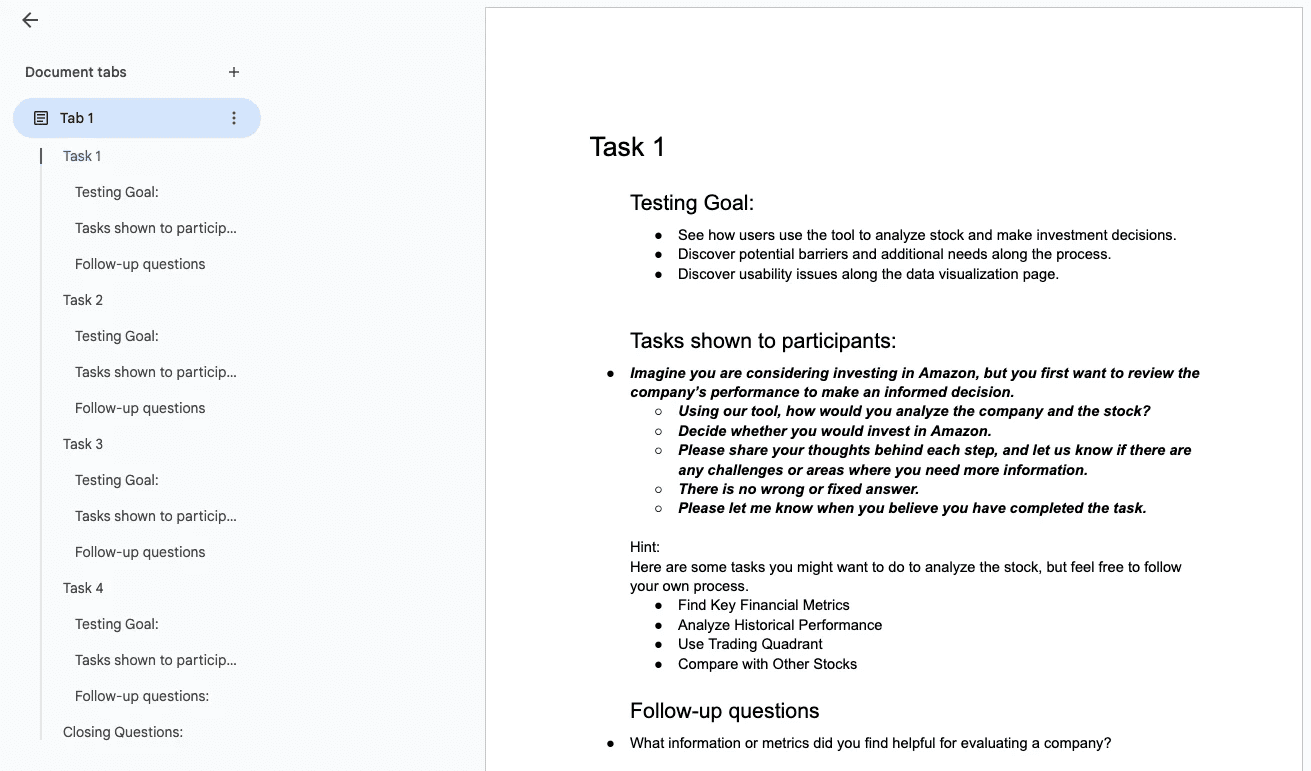
Task Overview
Findings
Who are our users?
Based on survey data and interview insights, we identified two main user types at ValueGlance. Among them, Michael, our Emerging Investor persona, is the primary user segment for paid subscriptions.

Michael
Emerging investor
Michael is a retired teacher and long-term investor who is transitioning from mutual funds and external advice to building his own strategy. He’s seeking a simple, trustworthy approach to make better use of his money.

Will
Hesistant investor
Will is in his early career. He read the book 'Stop Checking the Price' and been introduced to the tool - ValueGlance. He has little money in game, and is more suspicious that he usually double checks other investing sources.
*Stop Checking the Price is an investing book written by John Dorado, co-founder of ValueGlance.
We also agreed on the users who are NOT part of our target audience, such as day traders, technical traders, and professional traders.
Visualize the Customer Journey
I visualized the customer journey using the data collected from survey, usability testing insights, cross-channel user data analysis (AWS, Stripe, Substack), and my own UX audit.
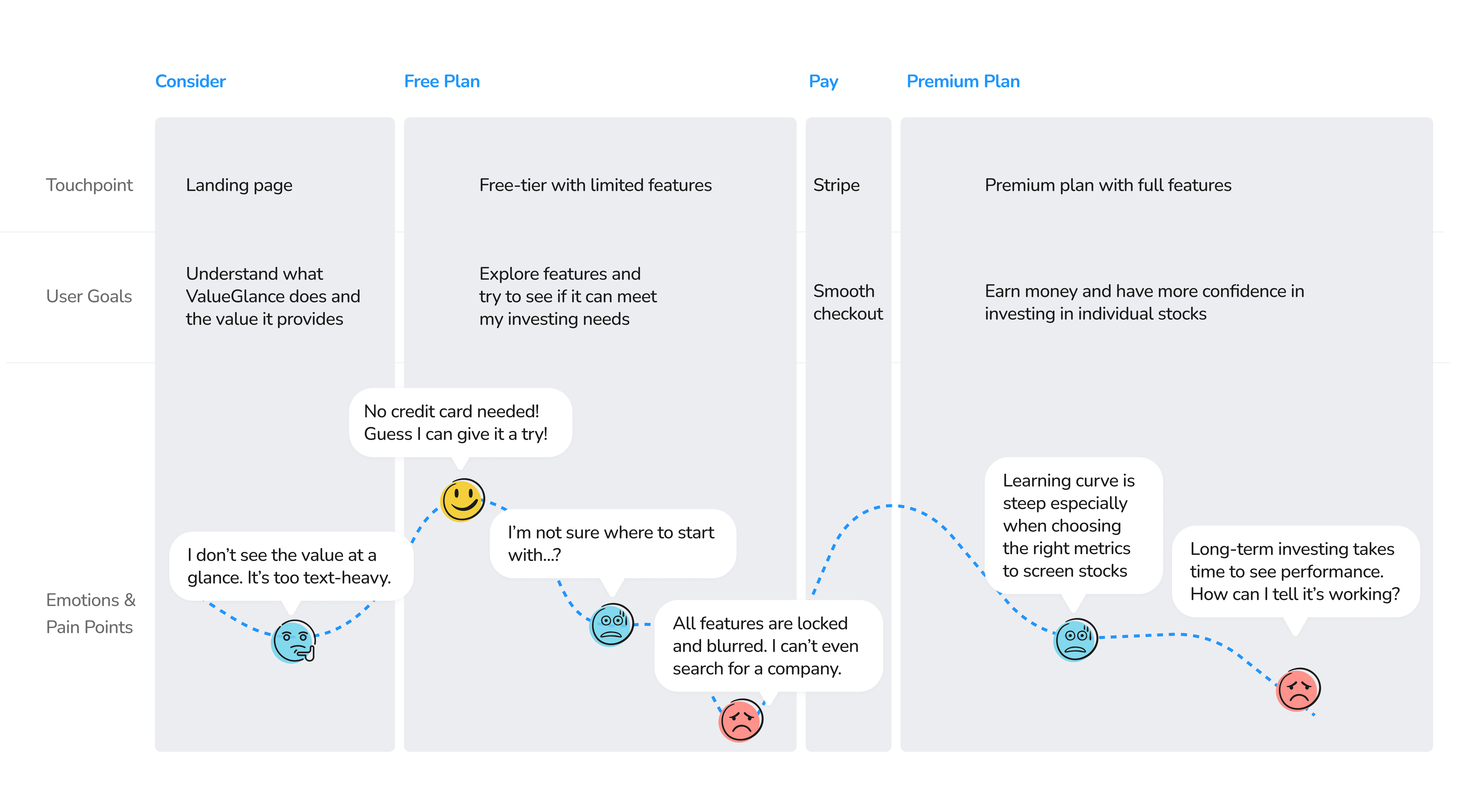
FREE PLAN
Free users weren’t getting enough value from the experience and felt uncertain about whether the paid version would be worth it.
40%
of free plan users said the product’s current features did not meet their needs, suggesting a gap between user expectations and current feature offerings.
20%
of free users were unsure whether the paid version offered enough additional value, indicating potential issues with value & feature communication.
20%
of free plan users said they don't use the product frequently.
PREMIUM PLAN
Screener has strong potential to meet users' investing needs, but its usability challenges are preventing users from fully benefiting from it.
90%
of users said 'Find potential stocks to invest in.' is the main goal of using an investing tool, showing that Screener could be a valuable feature.
3 out of 6
active users feel lost when choosing and setting up filters during the free exploration Screener task.
57.2%
of users feel difficult to use the Screener feature.
Over 50%
of users use the Screener feature infrequently.
PREMIUM PLAN
"If there's a way to go back in time and show someone following the same logic if they invested 10 years ago, what’s their investment would have grown to now, and that'll be great, like a proof of concept."
From usability interview with the active user
Learned from our target persona:
Michael
Emerging Investor
Trust is key!
Seeking a simple way to build his own strategy
From internal needs:

Finance Analyst
To give new users an easy starting point and build trust through high-CAGR strategies, we needed a tool that enables our internal finance analyst to create screening strategies tested and validated with historical data.
From Customer Journey Insights to Projects
From the understanding of the user persona and customer journey pain points, we planned the projects accordingly.
01
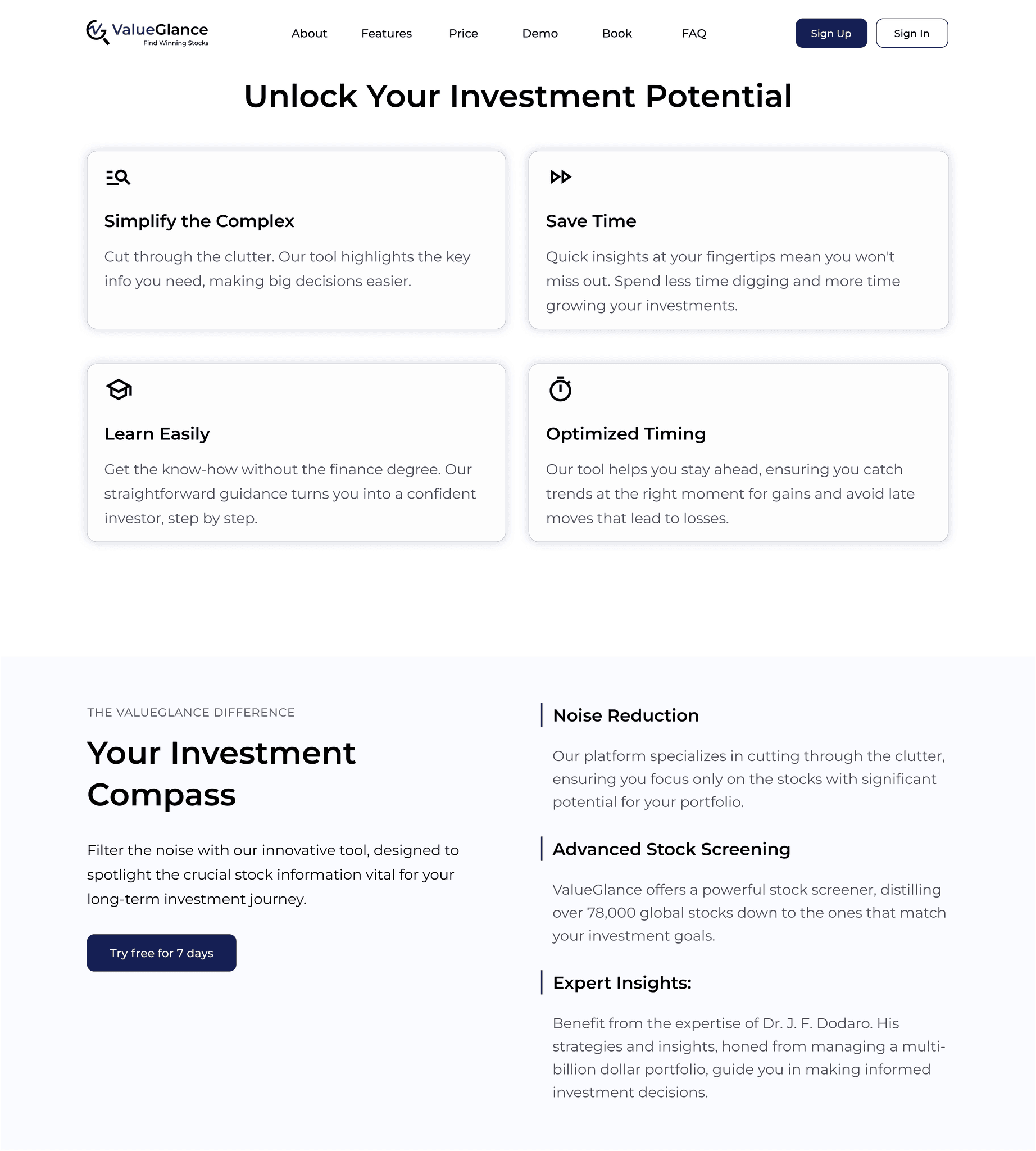
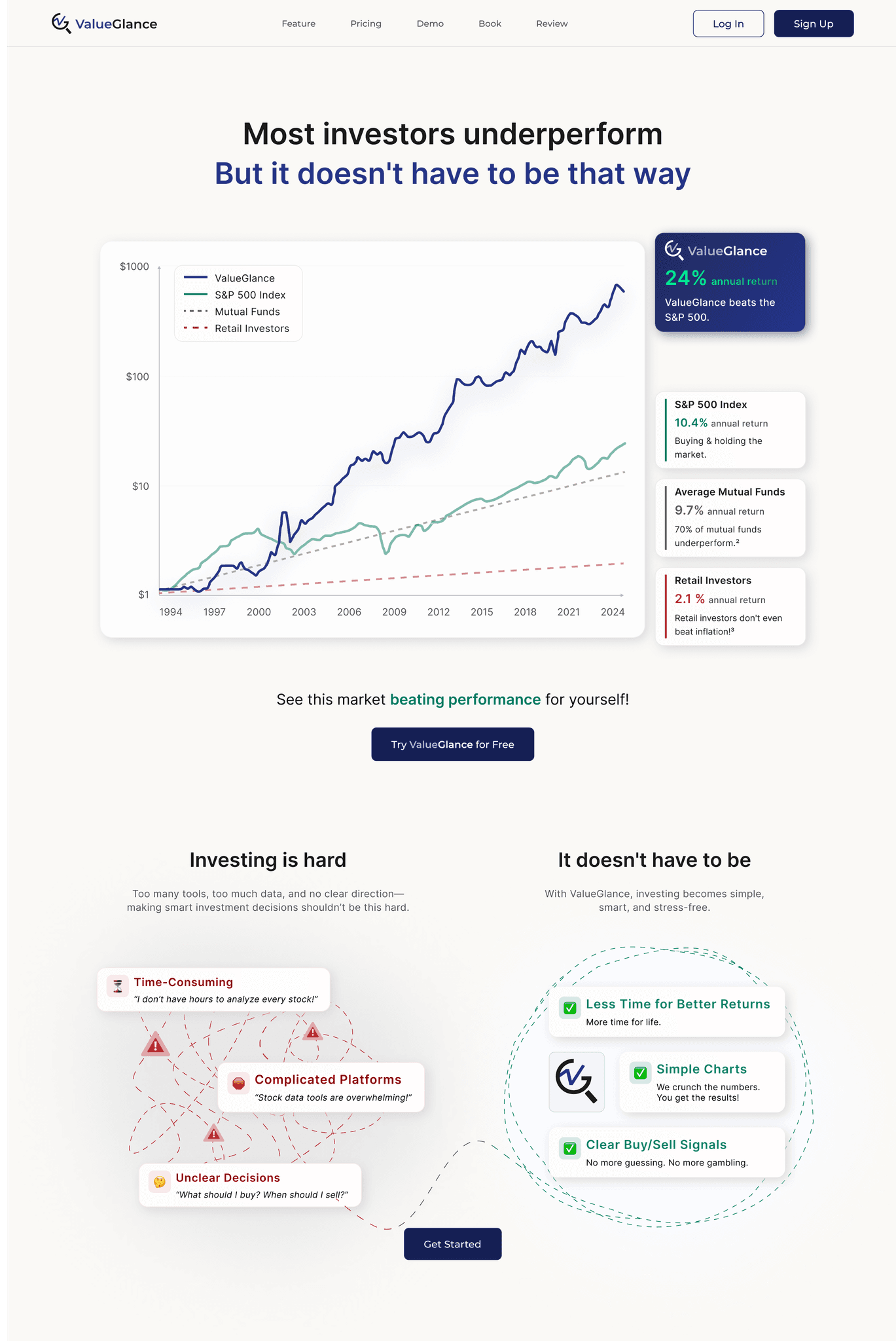
Landing Page Redesign
In this project, I collaborated with the finance analyst and the founder to design a new value proposition section using visuals and numbers to clearly communicates ValueGlance’s core value. The section was crafted to build trust in our investing strategy, guided by the needs of our target persona—Emerging Investors.
BEFORE
AFTER
02
Redesign Free Plan Experience
I collaborated with the founder on feature gating, redefining which features should be locked or unlocked based on the user’s plan.
From survey, we learned…
40% of respondents said the features didn’t meet their needs, followed by uncertainty about the value of the paid version and low platform usage (20% each).
With these insights, our goal is to ensure that new users could experience the core value of the product enough to understand its benefits and build trust, while still creating a natural path that motivates them to upgrade to the premium plan.
Dashboard
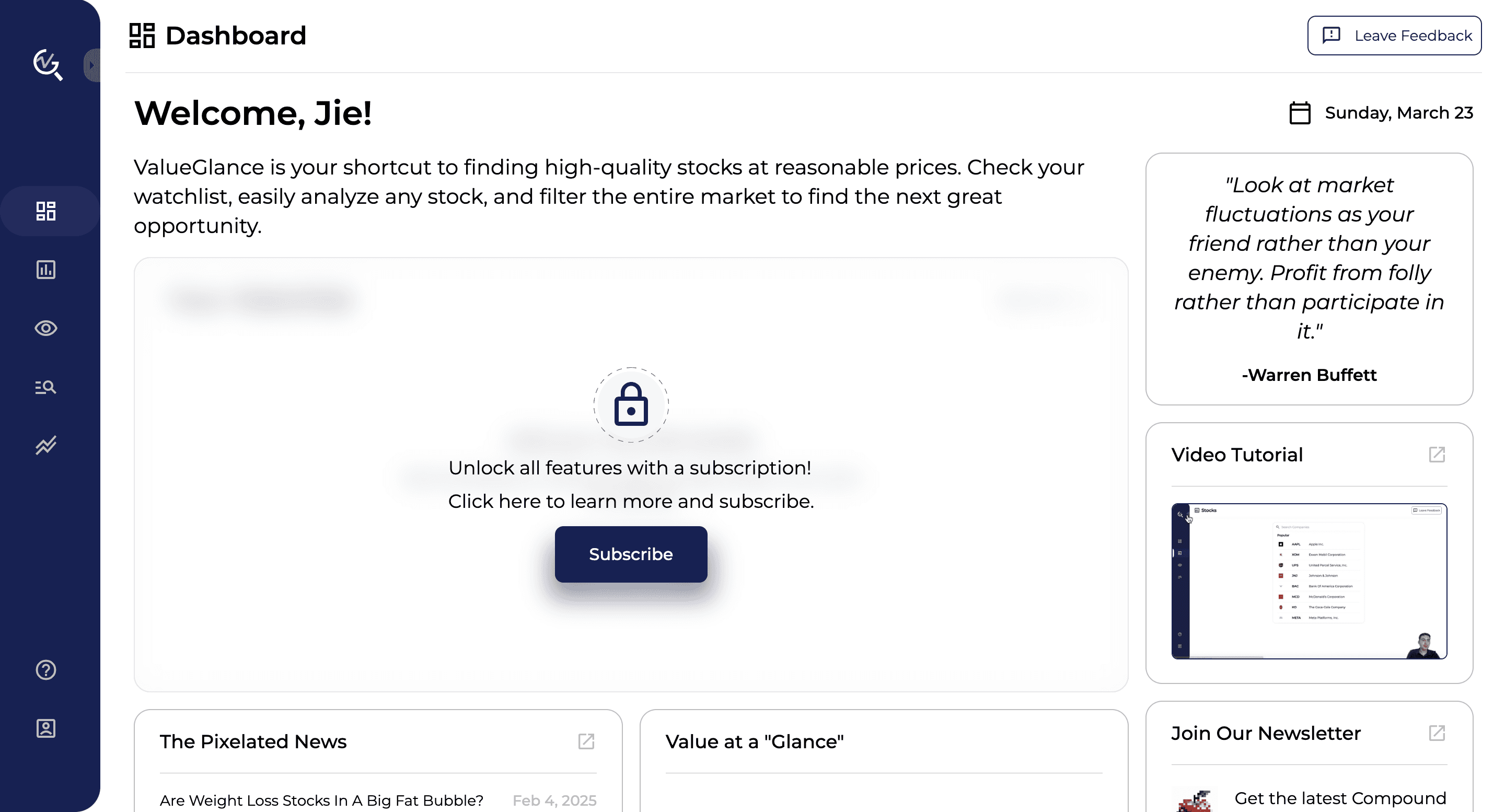
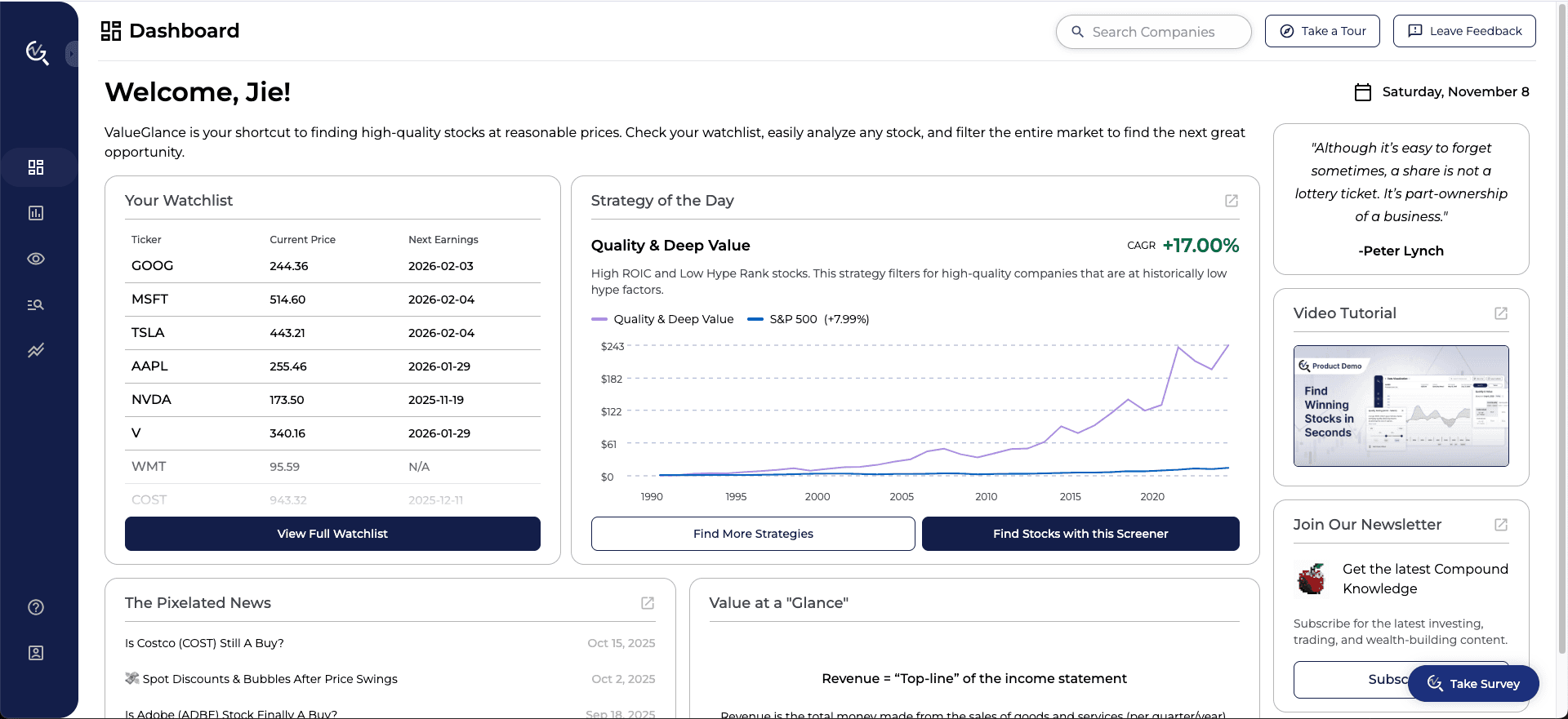
Instead of showing the blurred section, we decided to add default stocks to the watchlist for exploration, and designed a new 'Strategy of the Day' section for users to learn ValueGlance's sample strategy.
BEFORE
AFTER
Data Visualization
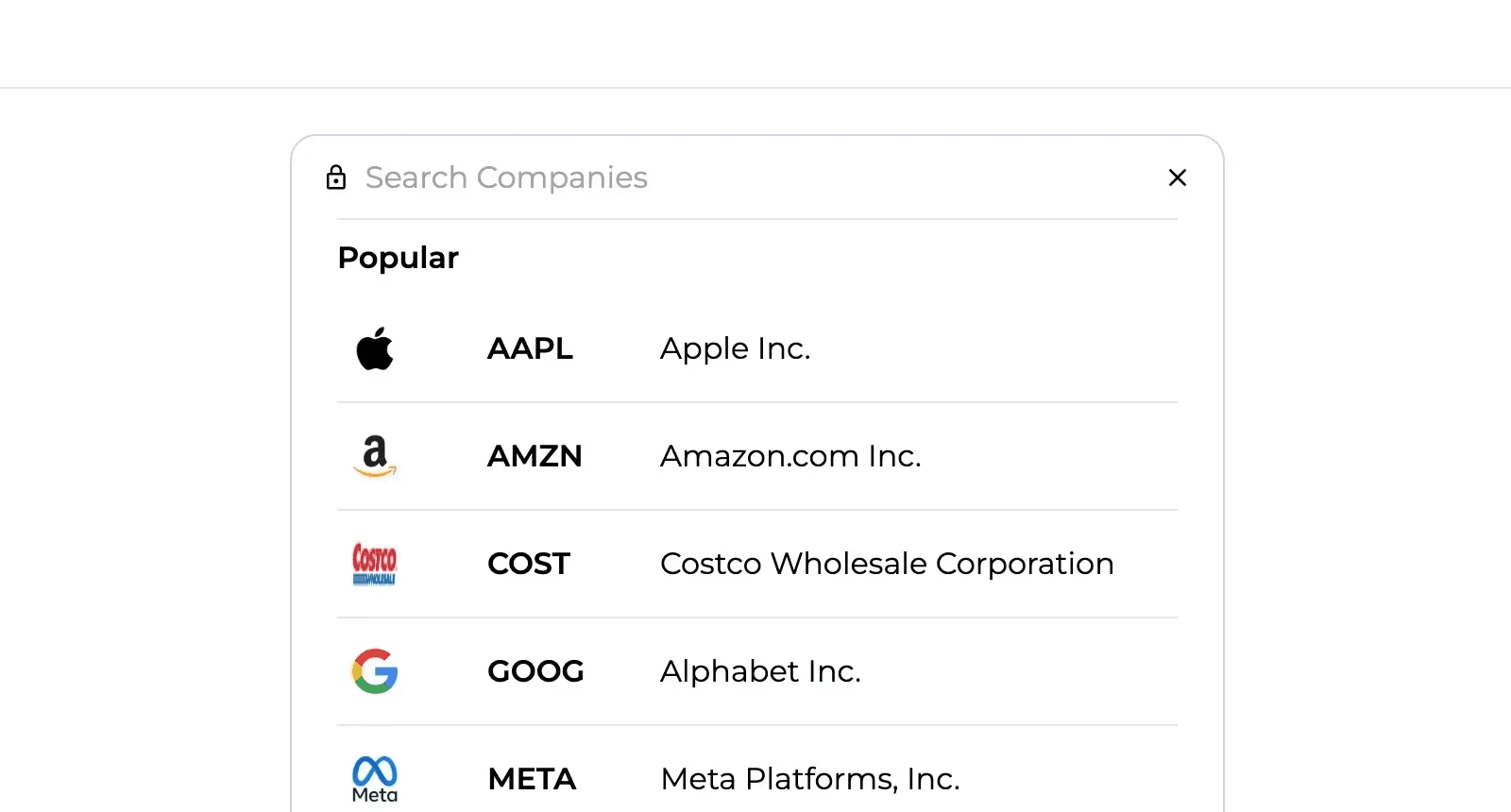
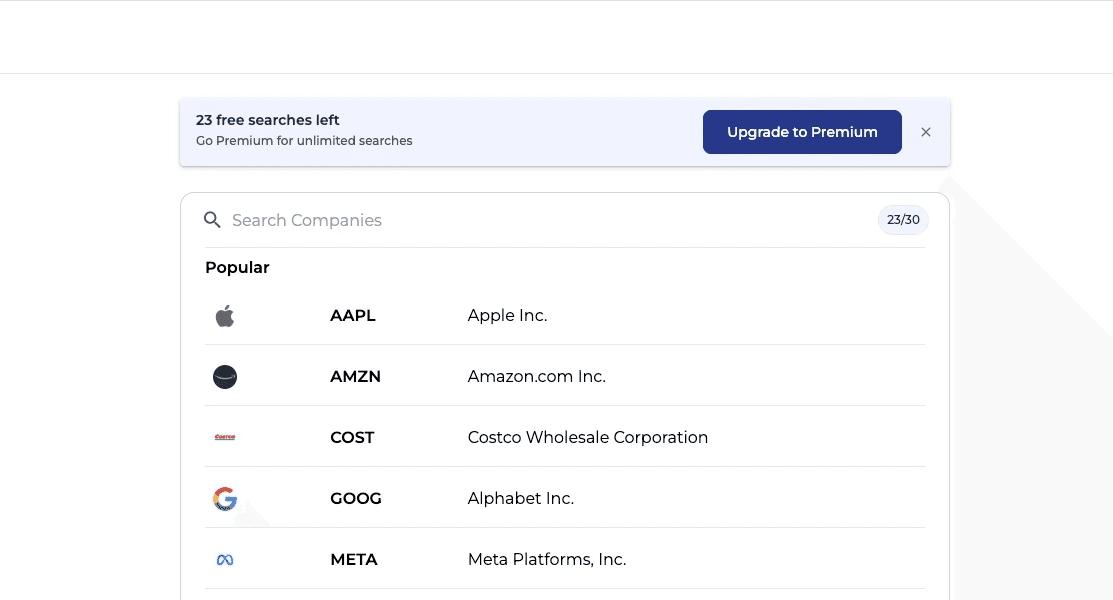
Previously, free users couldn’t search for any stocks. From our research, we learned that data visualization was the most frequently used and most satisfying feature for paid users. Based on this insight, we decided to unlock stock search for free users with a limit of 30 searches. Users who need more can upgrade to the paid plan.
BEFORE
Search is locked for free plan.
AFTER
Display the remaining search tokens with a dismissible banner and a number badge.
03
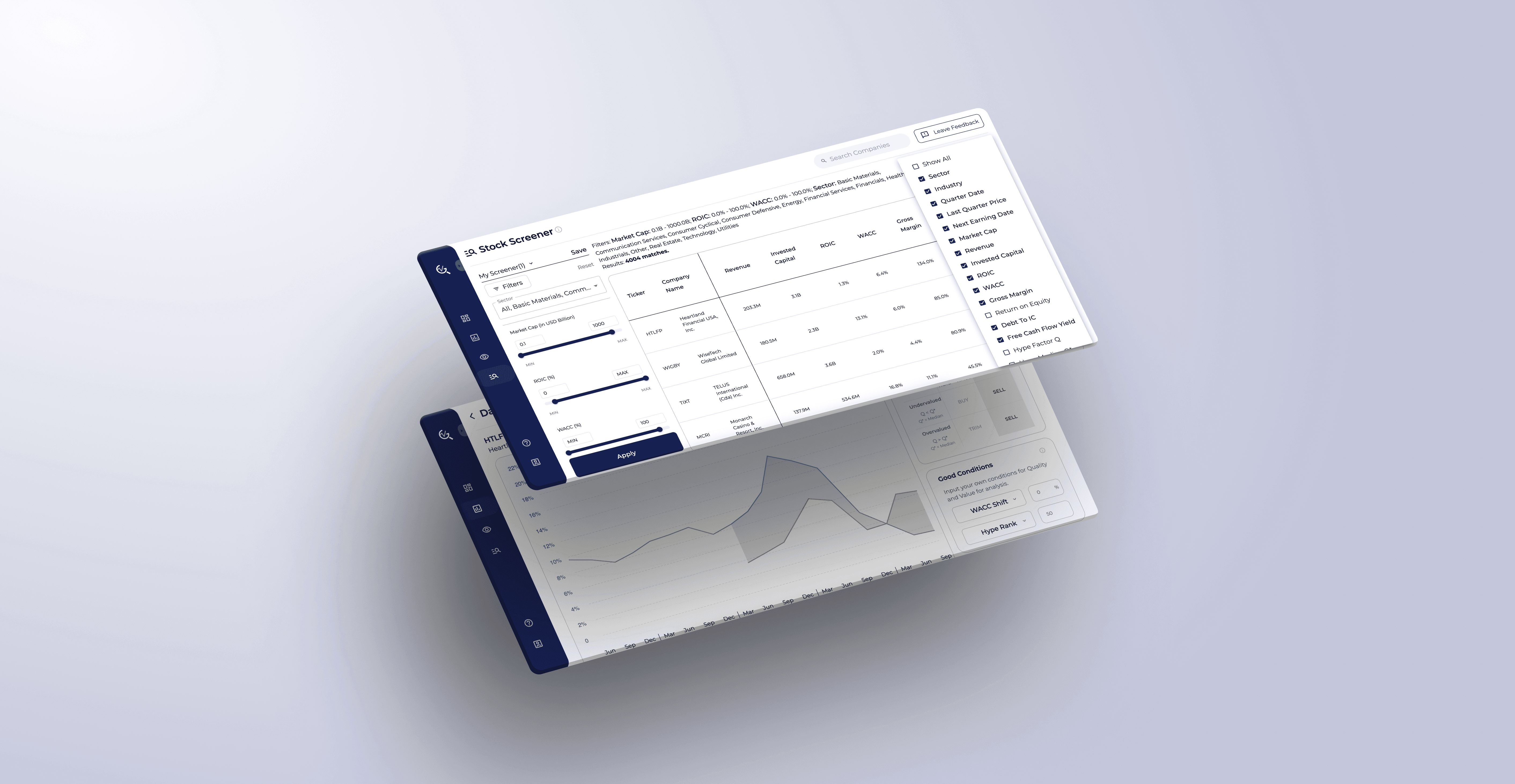
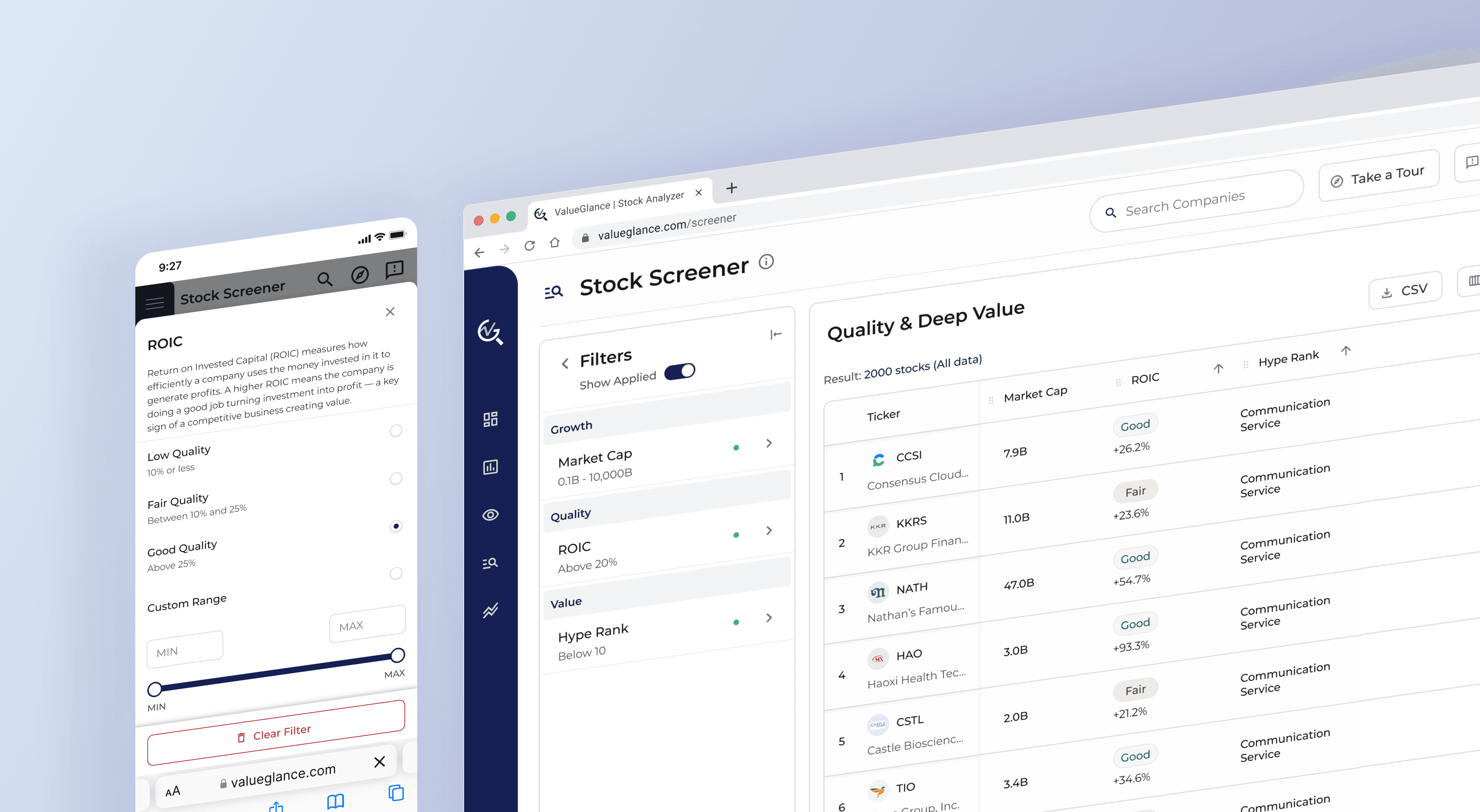
Redesign Stock Screener
We prioritized redesigning the Screener feature because it has strong potential to support users’ investing goals. However, due to its poor usability, users were unable to fully benefit from it.
04
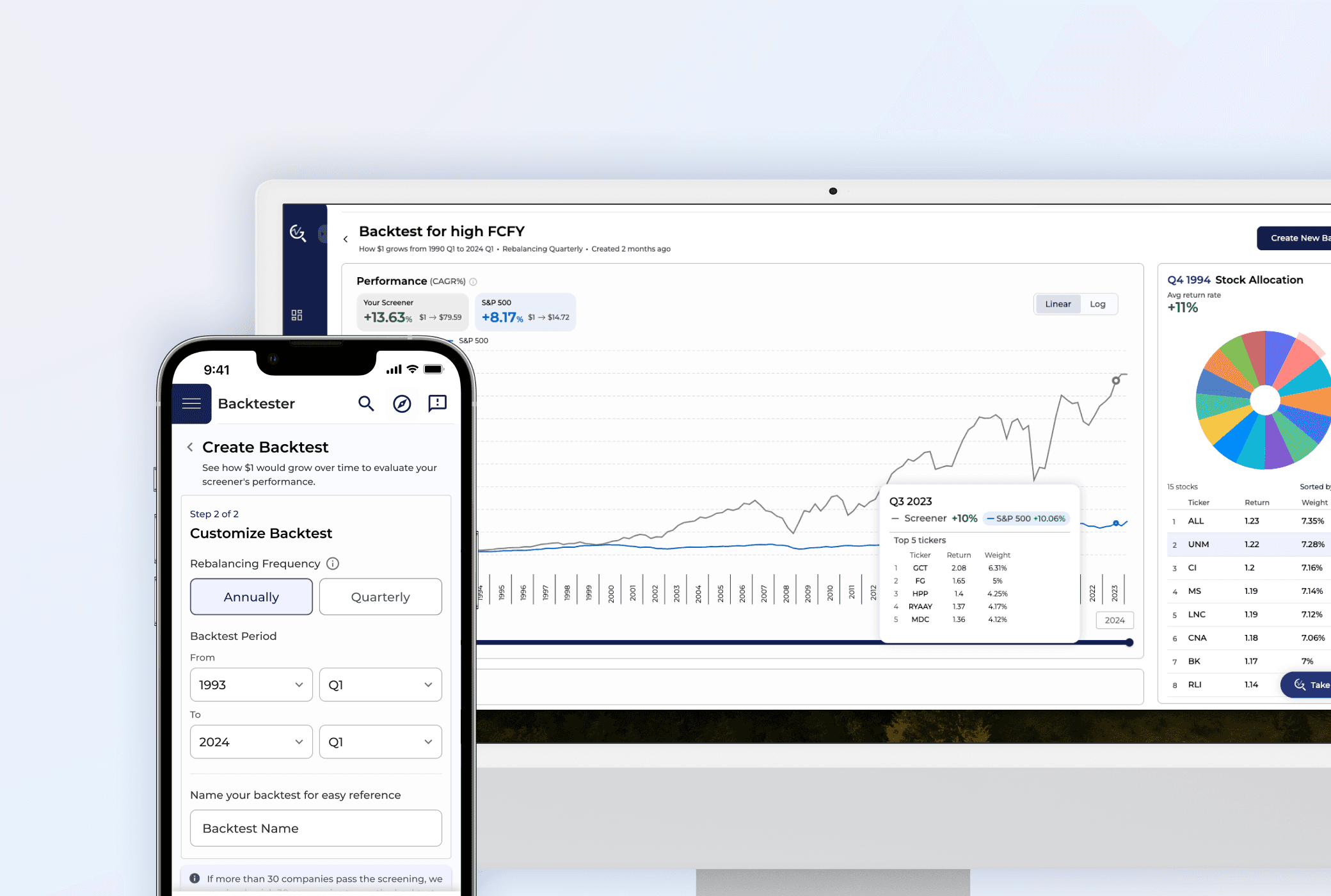
New feature 'Backtester' 0 to 1 design
I designed the new Backtester feature from 0 to 1, enabling our internal finance analyst to create four sample screening strategies for new users to start with.
My Learning
Advantages of Internal Usability Testing
Gather diverse cross-functional perspectives from on research protocol (e.g. financial analysts providing insights on task design for better alignment with real scenarios).
Uncover potential follow-up questions for formal interviews.
Identify and resolve minor, easily fixable issues with internal team before external testing.
Create post-interview summaries helps align the team to prioritize high-impact issues.